

Last April we asked our members to destroy their brassica cover crops, OSR volunteers or brassica based trap crops a little too late, which some of our members kindly pointed out to us.
So this year we’re sharing that message earlier.
Acting sooner gives growers a better chance to break the CSFB lifecycle and protect the progress made last season.
The destruction of border strips, in-field brassica mixes and cover crops is one of the industry’s ten shared strategies for oilseed rape success, compiled from trials, research and real farm experience.
While CSFB may be less obvious at this time of year, the next generation is already developing. Brassica plants left unchecked provide an ideal host for larvae, which will soon move into the soil to pupate before emerging as beetles later in the season. Once that stage is reached, this opportunity to interrupt the lifecycle has largely been missed.
That’s why the message is clear: any brassica trap crops or OSR volunteers should be destroyed by the end of February. Timely action reduces the risk of these areas becoming sources of reinfestation and helps lower overall CSFB pressure across the farm.
This joined-up approach reflects the wider shift towards integrated pest management, understanding pest behaviour, using cultural controls effectively and acting at the right time. Small, well-timed decisions can have a significant impact on long-term crop resilience.
After a positive season for oilseed rape, maintaining momentum now is critical. Timely destruction of trap crops is a simple but important step in supporting lower pest pressure and stronger establishment next season.
Check those beetles out of the CSFB hotel before the guests settle in for another season.
For additonal information on destroying your cover/trap crops please visit the AHDB Website
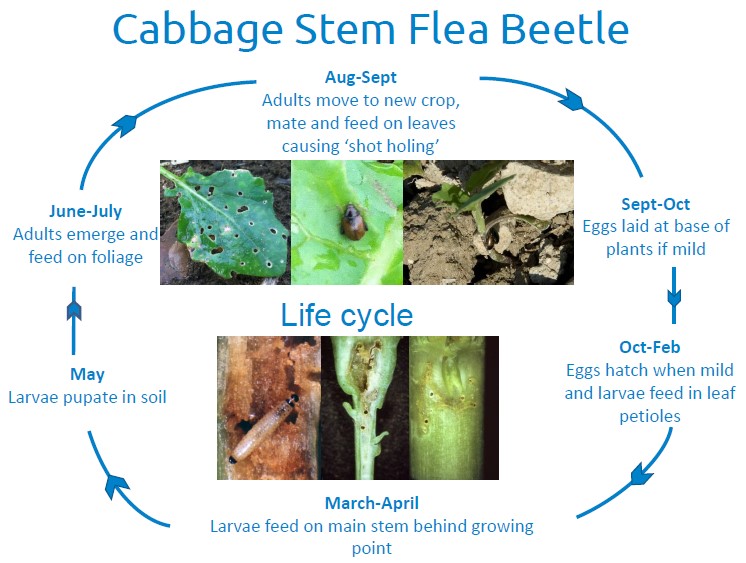
Picture courtesy of AHDB.