
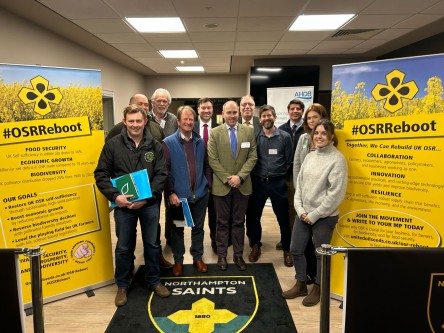
It was a busy start to the year, with James Warner ramping up efforts to shift the dial on the OSR Reboot. Beginning on 6 January, a series of five articles framing the reboot agenda were released. Episode One set the scene, reflecting on the events of the past decade that led United Oilseeds to launch its national OSR Reboot campaign.
Further articles followed over the next few days. Episode Two: Food Security is National Security called on policymakers, industry stakeholders and consumers to recognise the strategic importance of oilseed rape within the UK food system. Episode Three: A Billion Pound Opportunity – OSR and the Path to Economic Growth focused on the UK’s shift from being the world’s fifth-largest OSR exporter to importing 1.3 million tonnes annually, highlighting the unlevel playing field faced by UK farmers competing under far stricter regulatory conditions than their international counterparts.
Just days later, Episode Four: Reviving OSR – A Lifeline for Pollinators and Biodiversity examined declining pollinator populations and the lack of flowering crops during spring and early summer. It reinforced the vital role oilseed rape plays during this period, while continuing the theme of the unlevel playing field, this time focusing on the offshoring of the UK’s environmental footprint through imports produced under biodiversity-limiting controls.
The series concluded with Episode Five: More Than Just a Break Crop – The Multifaceted Benefits of OSR, which explored OSR’s agronomic benefits, operational efficiencies and economic advantages, positioning the crop as a cornerstone of UK food security that supports domestic production and reduces reliance on imports.
February saw the AHDB & United Oilseeds OSR Conference, A Decade of Challenges, a Future of Opportunities, alongside the launch of the national cabbage stem flea beetle (CSFB) larvae survey. The survey engaged 200 farmers from across the UK, with samples sent to NIAB for detailed analysis. Results, confirmed in May, showed larvae levels were significantly lower across most regions compared with previous years.
As March arrived, attention turned to alternative spring cropping options, including sunflowers, a crop less commonly grown in the UK but one in which United Oilseeds has invested in recent years. Following the first season of the sunflower marketing pool, we assessed both successes and challenges, including pricing, harvest timing and the potential benefits as the UK climate continues to warm.
In May, alongside the positive larvae survey results, United Oilseeds introduced a new pilot project with Agrisound. Acoustic listening devices were placed in a range of crops on selected farms, with results confirming that pollinator activity in oilseed rape was around five times higher than in legume fallow. The findings added weight to concerns that some SFI actions not only remove productive land from farming, but may also negatively impact pollinator activity nationwide.
June brought a strong focus on Cereals 2025, where United Oilseeds was pleased to host Shadow Minister Robbie Moore MP on its stand. During the same period, a news story explored the potential implications of a UK–US trade deal on feed wheat demand and future rotations. With the prospect of reduced feed wheat demand, could OSR help plug the gap through increased rapemeal demand? As the situation evolved over subsequent months, rapemeal demand within United Oilseeds increased significantly. June also provided the first indications of new funding opportunities focused on CSFB, with partner organisations preparing a joint statement for interested parties.
At this point, following extensive collaboration between OSR Reboot partners, one of the most important tangible outcomes of the initiative was released. Ten management strategies for managing CSFB in OSR, developed by AHDB and all Reboot partners, brought together the latest evidence into a robust, agreed set of integrated pest management (IPM) techniques. The aim was to improve grower confidence by providing practical, aligned guidance, believed to be the first time the entire industry has united in this way.
As the calendar moved into Q3, late July brought early optimism for OSR yields. Tracking harvest results from members field by field, a positive picture began to emerge. At the same time, United Oilseeds delivered a briefing paper to policymakers titled Flower Power in Policy, highlighting the importance of flowering crops in addressing the early-spring “hunger gap” for pollinators within future environmental schemes.
Positive yield reports continued throughout August as harvest progressed. In one exceptional case, a grower reported yields of 7.7 tonnes per hectare. Despite OSR being grown on the lowest planted area for over 40 years, overall production figures were ahead of the previous year, a powerful signal of what is achievable when establishment and pest pressure align.
August also saw the release of two news stories: one focusing on LG Avenger, highlighting later sowing and early vigour, and another examining positive oil bonuses, particularly LG Adapt’s high oil content performance. With OSR prices remaining stable throughout the year, it became increasingly clear that oilseed rape could be one of the strongest gross margin crops on farm.
As summer gave way to autumn, September provided an opportunity to review CSFB activity. While the yellow water trap network was partially disrupted by a European software update, insights from the stem larvae survey, regular on-farm reports and a short member survey helped build a consistent picture of reduced pest pressure. Although the precise cause remains unconfirmed, the article Less Bite, More Yield suggested a combination of natural cycles, weather, genetics and farm practice had helped keep CSFB pressure at bay.
In October, the official announcement of a new four-and-a-half-year funded research programme marked another major milestone. A total of £750,000 from AHDB, United Oilseeds, Defra and private partners will fund research led by ADAS, NIAB and Rothamsted Research, among others. CSFB Research+ aims to restore confidence in UK winter oilseed rape by developing and promoting practical IPM solutions in response to the loss of effective chemical controls.
November saw United Oilseeds host its annual results day at Newbury. Despite a challenging 2024/25 season, the cooperative announced profits of £1.2 million and confirmed that another profit redistribution payment would be made to trading members. Speakers included AHDB Cereals & Oilseeds Sector Director Sarah Woolford, who outlined the new CSFB funding programme and stressed the importance of industry-wide knowledge exchange, and regenerative farming advocate Tim Parton, who shared how improved understanding of soil biology has enabled him to produce healthy, profitable crops with minimal inputs.
James Warner also delivered some hard-hitting messages on the offshoring of the UK’s environmental footprint and the need for coherent, evidence-based policy that supports domestic production. This was neatly captured in his closing remarks:
“At United Oilseeds, we will continue to speak up for our members and push for sensible, joined-up policy that enables farmers to grow OSR confidently, profitably and sustainably. We’ve already shown through the OSR Reboot what’s possible when the industry pulls together — now it’s time for government to do its part.”
Finally, December marked United Oilseeds completing its 100,000th movement instruction since implementing its updated system in 2016, an achievement driven in no small part by the dedication of the transport team, Alan and Rebecca.
All that remains is for everyone at United Oilseeds to thank you for the role you played in a successful 2025 and to wish you every success for a strong and confident year ahead in 2026.